
About Us
A small crew, one long question
7 Sleepers is an independent film made by people who went looking for a cave and came back with something else entirely.
01 · Purpose
Why we are making this
A story that two billion Christians and two billion Muslims both carry has never been given a serious film. We are fixing that.
The Seven Sleepers of Ephesus, the Companions of the Cave, Ashab al-Kahf: seven young men hide from persecution, fall asleep, and wake three centuries later. The legend survived seventeen hundred years, crossed languages, and settled into scripture on both sides of a religious divide that people usually only argue across.
We are not here to settle which cave is the real one. Historians recognise several traditional sites and they are welcome to keep debating. What we are documenting is a search: the roads, the ruins, the archaeology, and what happens to a person who takes an ancient story seriously enough to go find it.
The film is independent, self-funded, and shot on location. No reconstruction sets, no green screen, no narrator explaining the moral. Just the places, the evidence, and one man's testimony about what changed in him along the way.
02 · Common ground
One story, two traditions
Same sleepers, same cave, same waking. Two faiths that rarely agree on the details have kept the identical story alive for centuries. That overlap is the reason this film exists.
Christian tradition
Islamic tradition
Known as
The Seven Sleepers of Ephesus
Ashab al-Kahf, the Companions of the Cave
Earliest source
Syriac accounts from the fifth century, later carried into Latin by Gregory of Tours
Surah Al-Kahf, the eighteenth chapter of the Qur'an
The sleep
Roughly two centuries, from the persecution under Decius to the reign of Theodosius
Three hundred years, and nine more, as the text puts it
The meaning
Proof of bodily resurrection, told to a generation that doubted it
A sign of God's power over time, and of shelter given to those who keep faith
Sites claimed
The grotto on Panayır Dağı above Ephesus, venerated since late antiquity
Eshab-ı Kehf near Afşin, plus rival caves in Tarsus, Jordan and beyond
Still marked
Feast days kept in Orthodox and Catholic calendars
Surah Al-Kahf recited weekly by many Muslims on Fridays
03 · Method
How we work
-
01
Go to the place
Every location in the film was visited, walked and filmed in person. If we could not stand in it, it did not make the cut. That rule cost us months and it is the reason the footage looks the way it does.
-
02
Show the rival claims
Several sites claim the cave. We film them all and let you see what each one has going for it. A documentary that hides the competing evidence is not investigating anything, it is advertising.
-
03
Separate record from belief
Archaeology, inscriptions and dated sources are presented as what they are. Personal conviction is labelled as personal conviction. The audience gets to know which is which at every point.
-
04
Treat both scriptures with respect
The Qur'an and the Christian accounts are quoted accurately and in context, checked against the original languages where possible. No cherry-picking to score a point against either tradition.
-
05
Stay small
A tiny crew gets access a large one never will: village elders, mosque caretakers, site guards, people who actually live beside these ruins. Independence is not a budget constraint here, it is the working method.
-
06
Score it ourselves
The music is original, written and performed by the director, drawing on the Psalms and on Anatolian and Greek melodic traditions. The soundtrack carries the same argument as the picture.
We did not set out to prove anything. We set out to look properly.
Filming ran across İzmir, Mersin and Kahramanmaraş, with side trips to Jordan and Jerusalem. Thousands of kilometres, a lot of bad roads, one recurring question.
04 · The crew
Who we are
7 Sleepers is led by one person wearing most of the hats, supported by local guides, site custodians and researchers across Türkiye and Jordan.
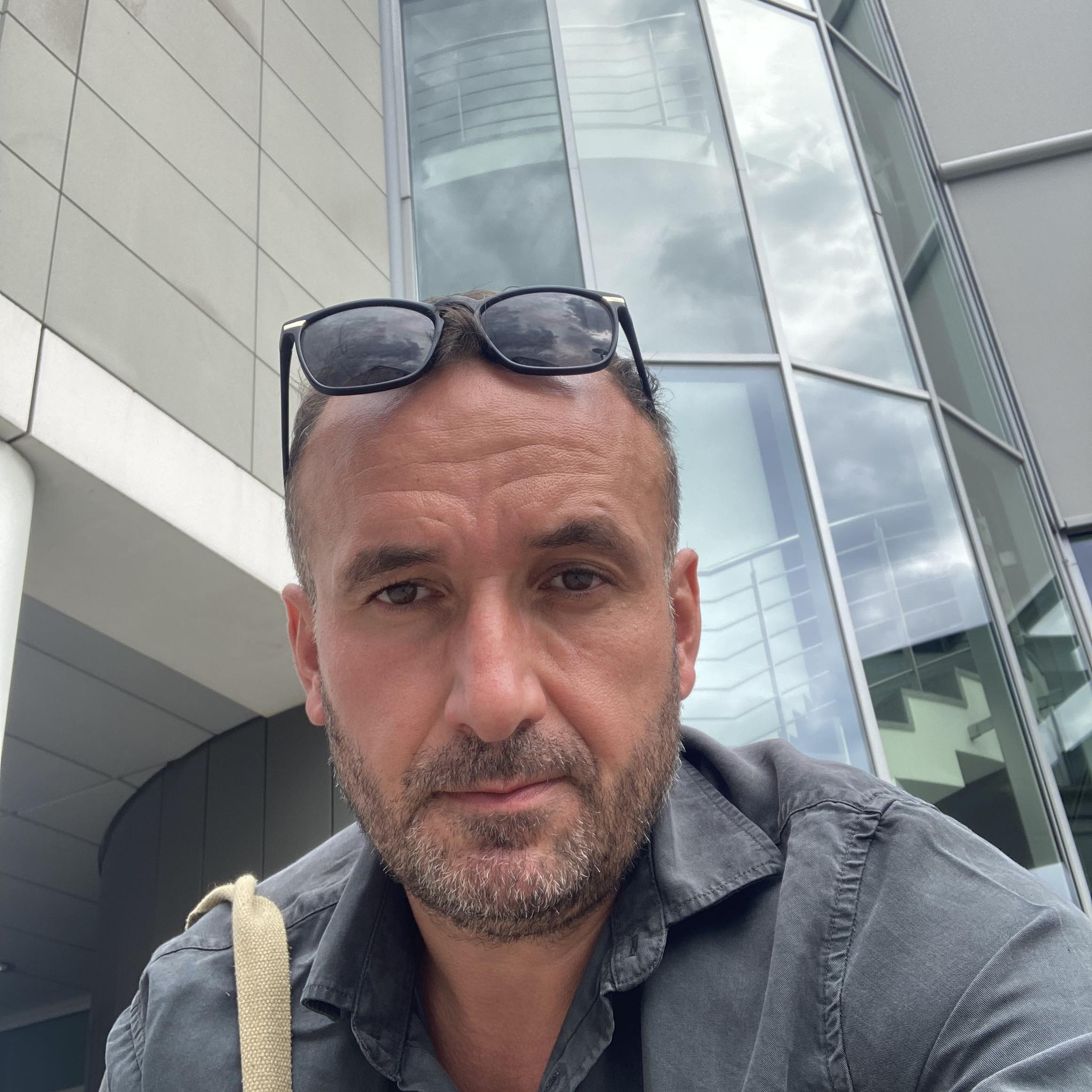
Nesi
Director · Cinematographer · Composer
Born on the Black Sea coast of Turkey, raised in Germany, now based in Canada. Trained as a mechanical engineer in Karlsruhe, worked at Mercedes, then studied Islamic theology in Tübingen. The engineering habit of taking things apart to see how they work is exactly what he brought to this legend.
Read his full story- Local guides and fixersİzmir · Mersin · Kahramanmaraş
- Site custodians and caretakersEshab-ı Kehf · Ephesus
- Historical and scriptural reviewArabic · Hebrew · Greek
- Original score and performanceTrumpet · Voice
- Post-production and gradeIn progress
By the numbers
- Provinces filmed
- 3
- Countries visited
- 4
- Candidate caves
- 6+
- Years in the making
- 2
- Age of the legend
- ~1,700
- Crew on location
- 1
Numbers reflect production as of the current cut and will be updated at release.
05 · Contact
Festivals, press, or a lead on the cave
We are talking to festival programmers and distributors ahead of release. If you are a historian, an archaeologist, or someone whose grandfather told a story about that cave, we especially want to hear from you.
- Press hello@7sleepersmovie.com
- Director nesi.ca
- Teaser Watch on YouTube
- Based in Edmonton, Alberta, Canada
- Status In production, release date to come