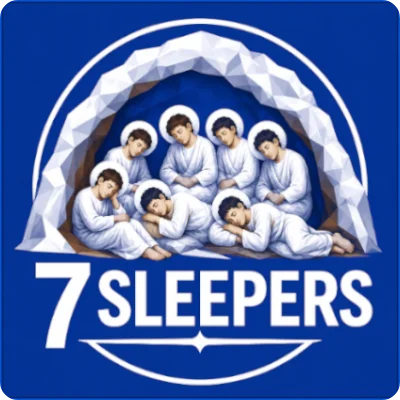

Seven Sleepers of Ephesus in Bible
Seven Sleepers of Ephesus in the Bible
Are the Seven Sleepers of Ephesus mentioned in the Bible? Although the story of the Seven Sleepers does not appear directly in the Old or New Testament, it has strong connections to biblical teachings about faith, persecution, divine protection, and resurrection.
According to Christian tradition, seven young men refused to worship Roman gods during the persecution of Christians under Emperor Decius in the third century AD. They fled to a cave, where they miraculously fell asleep and awakened centuries later. Their awakening became a powerful symbol of God's ability to raise the dead.
Biblical Connections to the Seven Sleepers
The legend reflects several important teachings found in the Bible:
- Daniel 12:2: "And many of them that sleep in the dust of the earth shall awake." This passage describes the resurrection of the dead, a central theme of the Seven Sleepers legend.
- John 11:25: Jesus declares, "I am the resurrection, and the life." The awakening of the Seven Sleepers is traditionally understood as a sign of God's power over death.
- Matthew 5:10: Jesus blesses those who are persecuted for righteousness. Like the early Christian martyrs, the Seven Sleepers are remembered for refusing to abandon their faith.
- 1 Thessalonians 4:14: The Apostle Paul teaches that God will bring with Jesus those who have fallen asleep in him, connecting the imagery of sleep with Christian hope in resurrection.
The Seven Sleepers and the Resurrection
The Seven Sleepers of Ephesus became an important Christian legend because their miraculous awakening was interpreted as a sign supporting belief in the resurrection of the dead.
According to the traditional account, the young men awakened during the reign of Emperor Theodosius II in the fifth century, when Christianity had become widely established in the Roman Empire.
The Seven Sleepers in Christianity and Islam
The story also appears in Surah Al-Kahf (Chapter 18:9–26) of the Quran, where the young believers are known as the Companions of the Cave (Ashab al-Kahf). The Quranic account likewise emphasizes God's power to preserve life and awaken those who sleep.
Although the Seven Sleepers are not biblical figures, their story remains an important part of Christian and Islamic religious heritage, connecting the themes of unwavering faith, divine protection, and resurrection.
Explore More About the Seven Sleepers
A Christian legend
Seven Sleepers of Ephesus
How a 5th-century Christian story became one of the most widely shared sacred narratives of the Mediterranean and Near East.
01 · Origins
A christian legend which is not in the bible: Seven Sleepers
The earliest complete versions of the Seven Sleepers story appear in the middle of the 5th century. Most scholars regard the legend as a product of that period rather than a continuous oral tradition reaching back to the 3rd century. Its immediate purpose was theological: to provide a vivid, popular demonstration of the bodily resurrection at a time when that doctrine was contested.
Whether the original language was Greek or Syriac remains debated. Both traditions are early and closely related. The story was almost certainly composed in the Christian East, in or near Asia Minor.
02 · Literary Spread
From East to West and Christianity into Islam
Within a century the legend had been translated or adapted into Latin (known to Gregory of Tours), Armenian, Coptic, and other languages. In the Latin West it entered collections of saints’ lives and later the Golden Legend. In the Syriac churches it was the subject of homilies and poetry.
By the early 7th century the story was sufficiently well known in Arabia to be alluded to in the Qur’an (Surah Al-Kahf). The Quranic version assumes an audience already familiar with the basic narrative and focuses on the theological lessons rather than retelling every detail.
03 · Characteristics of the Legend
What makes it distinctive
- A realistic historical setting (Decian persecution) combined with a miraculous suspension of time.
- Emphasis on the incorruptibility of the body as a sign of future resurrection.
- An awakening that exposes the radical change of the world (from persecution to Christian empire).
- Great flexibility in secondary details (number of sleepers, exact duration, names, presence of a dog).
04 · Enduring Power
Why the story still matters
The legend has survived because it speaks to permanent human questions: the meaning of time, the fate of the body after death, and the possibility that God can interrupt ordinary history. The film 7 Sleepers returns to these questions by treating the ancient story as a living invitation to search, rather than a closed chapter of folklore.